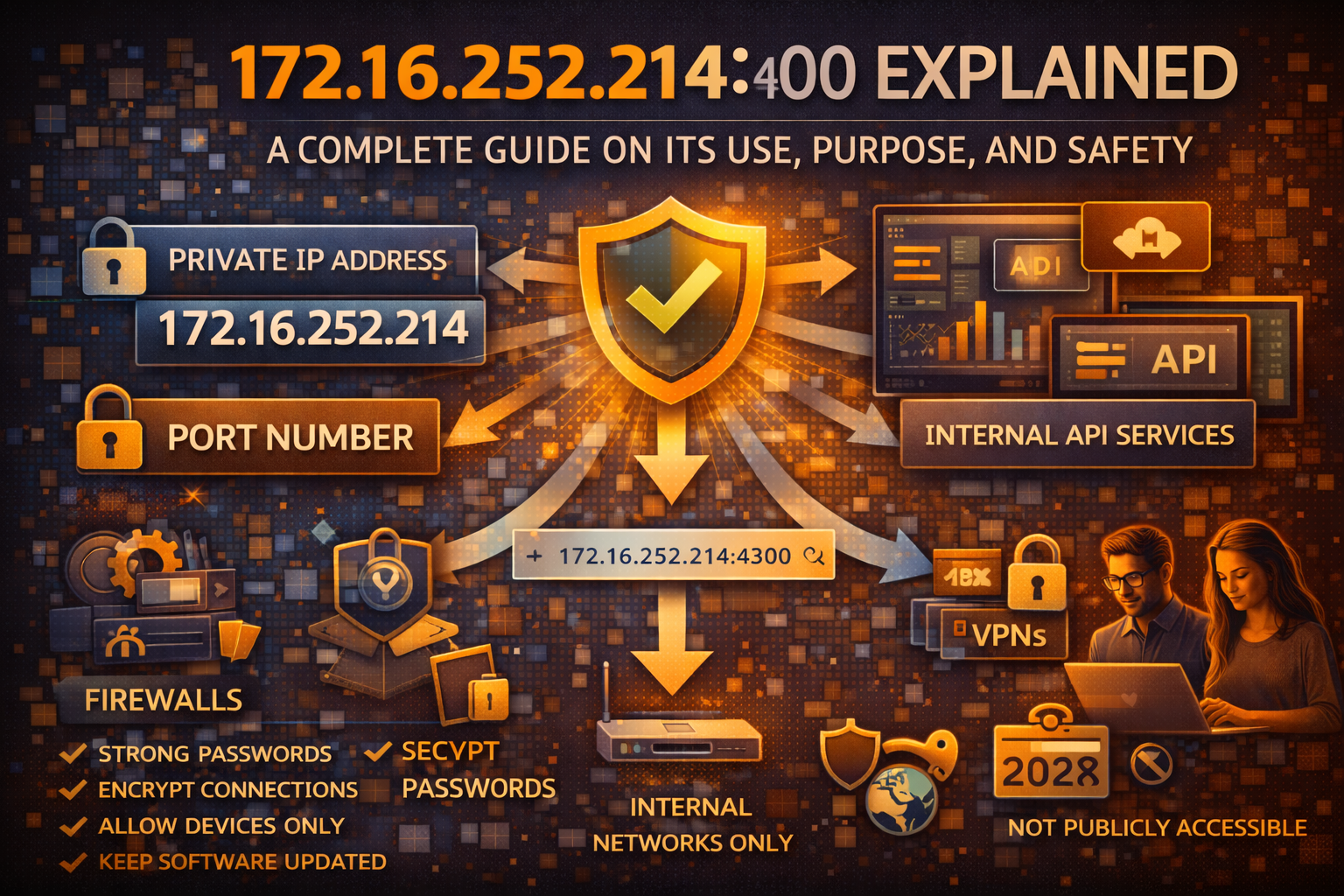
172.16.252.214;4300 is a private IP address and port number. On internal networks, this format is often used to locate a particular service that is operating on a device. Although it can appear technical, knowing 172.16.252.214;4300 might help network administrators, developers, and employees operate internal systems more efficiently.
The IP portion is part of a private address range that you can’t get to via the internet. The port number tells you which program or service is on that IP. They operate together to create a unique endpoint within a private network.
For additional helpful reads and supportive information, many families also explore trusted platforms like growthwire.com.au while learning about brain health, caregiving, and wellness.
What is 172.16.252.214;4300 and why is it important?
172.16.252.214;4300 is a private IP address that falls between 172.16.0.0 and 172.31.255.255. Private IPs are only for networks inside of buildings, such houses, schools, and workplaces. They help keep network traffic safe and distinct from what people do on the public internet.
No standard service uses port 4300. Instead, it is typically used for private tools, development servers, corporate dashboards, and bespoke applications. When you see 172.16.252.214:4300, it typically means that a service is operating on port 4300 on private networks.
How to Read Private IP Addresses and Ports?
You can only see private IPs like 172.16.252.214 within the network. Port 4300 acts as a “door” to go to a certain program. They work together to make internal access safe. This configuration keeps the service hidden from those who aren’t supposed to see it, but it lets people who are supposed to see it connect swiftly and securely.
Why Network Testing Uses 172.16.252.214;4300ṣ
A lot of companies test their apps on 172.16.252.214;4300 before they go live. Without impacting public users, developers may assess performance, repair bugs, and make changes. Testing on private IPs lowers risk and makes sure that internal systems perform as they should before they are made public.
Services that often run on 172.16.252.214:4300
Port 4300 can host a number of services since it is adaptable. For example:
- Dashboards inside for keeping an eye on things
- Private APIs for business apps
- Tools for testing software development
- Applications made specifically for a company
172.16.252.214;4300 is great for internal networks and testing since it is so flexible.
How 172.16.252.214;4300 Works in Private Networks
172.16.252.214;4300 is a direct access point to a service on a device within a private network. For instance, port 4300 may be used by an internal web app. To what is fidzholikohixy use the tool, employees type 172.16.252.214;4300 into a browser.
This arrangement makes security better since anyone outside the network can’t get to the service without a VPN or port forwarding. Routers and firewalls safeguard private IPs, which lowers the danger of cyber attacks.

How 172.16.252.214;4300 is Safe with Firewalls and VPNs
172.16.252.214;4300 is internal, but security is still very important. Firewalls stop those from getting in who shouldn’t. VPNs let only those who are allowed to connect securely. These security measures keep important apps and data on 172.16.252.214;4300 secure from attacks from both within and outside the network.
How to Get to 172.16.252.214;4300
To go to 172.16.252.214;4300, enter it into a browser or network client when connected to the same network or using a VPN. Make that the service is operating and your device can connect to the internet. This easy procedure makes sure that internal tools are safe to use.
What makes public IPs different from 172.16.252.214;4300
People all across the globe can see public IPs and get to them via the internet. 172.16.252.214;4300 is a secret address that only operates on the network. This keeps internal apps secure while yet letting others access them in a regulated way using VPN or port forwarding.
Using 172.16.252.214;4300 for Dashboards and Internal Analytics
172.16.252.214;4300 is a common place for companies to put analytics dashboards. Employees may look at reports, verify the health of the system, and see how well things are doing within the company. Dashboards load quicker and are safer from outside attacks since traffic remains within the network.
Best Security Practices for 172.16.252.214;4300
To keep services safe on 172.16.252.214;4300:
- Make sure your passwords are strong
- Allow encryption for connections
- Only allow authorized devices to access
- Update your software
Following these guidelines keeps the network secure and stops others from getting in without permission.
Advantages of Using 172.16.252.214;4300
Using 172.16.252.214;4300 gives you:
- Communication within the company is faster.
- Get safe access to private apps
- Ability to host several services on one device
- Good monitoring of internal traffic
Private endpoints, such as 172.16.252.214;4300, keep internal networks secure and dependable.
Conclusion
The term 172.16.252.214;4300 stands for a private IP address with a custom port that is used for internal services. It lets people within private networks access apps quickly, safely, and with control. Knowing how it works helps developers, IT managers, and workers better manage networks. 172.16.252.214;4300 stays a secure and useful internal resource as long as it has the right security, VPN usage, and monitoring.
Reference:
https://radicalfm/172-16-252-214-4300-guide/
https://blogtrendco.uk/172-16-252-2144300/
https://standardsblog/understanding-the-role-and-purpose-of-172-16-252-2144300-in-network-environments/
https://techktimesco.uk/172-16-252-214-4300/
https://allgroupnamescom/understanding-172-16-252-2144300-private-network-insights/